179 days to go
Defending JacobThe 179-day countdown marks the interval between Jacob Barber’s arrest and his trial, scheduled for October 17. For Andrew Barber and his family, the date becomes an imagined endpoint: the arrest and court appearances pass, but the long wait that follows makes each ordinary day feel charged with dread. The countdown also gives the trial a narrative counterpart. At its opening, Neal Logiudice urges the jury to understand the case through a concise story of provocation and sudden loss of control, illustrating how legal argument tries to fill the very uncertainty that the family has endured.
The trial date as an endpoint
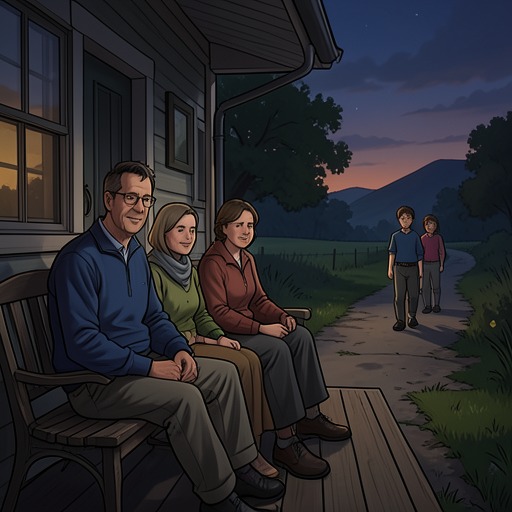
After Jacob’s arrest, the family’s days acquire an unbearable urgency and a constant anxiety. Andrew describes the trial date as an endpoint beyond which the family cannot imagine what comes next. They count down the 179 days, not because the trial promises an easy resolution, but because the waiting has become its own ordeal.
The distinction between the arrest and the following weeks matters. The arrest and arraignment are dramatic, discrete events; they pass. The suffering that follows is quieter and more sustained: unoccupied afternoons in a quiet house, worry, and an intensified awareness of time. The days seem both too few and too long. The family eventually longs for the trial simply because it cannot endure the waiting any longer; Andrew compares the interval to a deathwatch.
A day counted within the interval
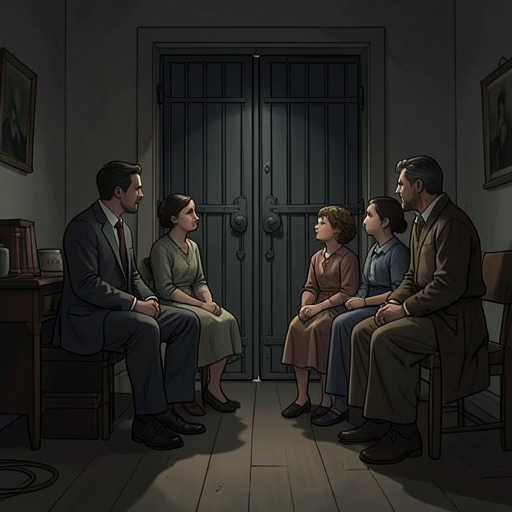
One night in May, 28 days after the arrest and with 151 days still remaining, the three members of the family sit together at dinner. Jacob is sullen and keeps his eyes mostly on his plate. His habitual, noisy chewing and his offhand complaint about having to do this every night make the strained routine visible at the table.
Laurie asks what he means, but the exchange does not resolve the tension. She clears her throat, apologizes, and leaves the table. The scene ends by returning to the remaining count: 151 days. The number is not merely a measure of time until court; it hangs over an everyday family interaction, making the home itself part of the period of waiting.
The prosecution’s story of the case
At trial, Neal Logiudice presents a sharply formed account of the killing. He describes Ben Rifkin as a fourteen-year-old found dead in Cold Spring Park, and emphasizes the location, the morning, Ben’s route toward school, and his proximity to home. Logiudice reduces the decision to kill to a second, then frames Jacob as a boy with an apparently privileged life and a lethal temper who, after ordinary teasing, “snapped.”
That phrase is not a neutral description of established motive. Andrew observes that prosecutors must give jurors a story that answers what a case is about; facts alone may not supply the causal explanation they want. Logiudice’s proposed story makes the alleged killing intelligible as a progression from teasing to a sudden act. He acknowledges that Ben was not a saint and that jurors would hear unflattering details, while insisting that Ben was an ordinary fourteen-year-old with a life ahead of him. He contrasts that account with his portrayal of Jacob as quiet, lonely, and an outsider among his classmates.
The unresolved trigger
Logiudice also argues that Jacob left home for Cold Spring Park on April 12, 2007, carrying a knife and an idea, and was waiting for a trigger. Yet when he asks what converted a fantasy of murder into a real killing, he offers possibilities rather than a demonstrated answer: perhaps Ben used an insult, pushed Jacob, threatened him, or bullied him. His conclusion is that this probably happened.
Andrew recognizes the gap between the prosecution’s persuasive theme and its uncertain explanation. A motive may not be a formal element of the charge, but, in his account, jurors still want a logical answer to why the crime occurred. The countdown and the trial opening thus frame two kinds of waiting: the family’s calendar-bound wait for October 17, and the jury’s demand for a coherent account of what happened. The prosecution supplies a memorable phrase, but the cause it is meant to explain remains unresolved in the evidence presented here.